Search Results
Search this site
21 results found with an empty search
- The Dry Side of Farming
By: Hayes Oliver and Javon Huynh
- Farm to Table, How Chickens Make Their Way to You
By: Morgan Boone and Jamari Davis
- World Soil Day 2023: Celebrate It While It’s Still Here..
By: Katie Koblasz and Margaret Brogan World Soil Day is observed annually on December 5 to celebrate the multifaceted role soil plays in our everyday lives. World Soil Day serves to remind us that we walk over soils in more ways than one. The state of soil is in critical condition globally. According to research conducted by the University of Massachusetts Amherst, over the past 160 years the Midwestern United States has lost 57.6 billion tons of topsoil due to overconsumption, unsustainable human activities, farming practices, and erosion. Soil is classified as a finite resource, because its loss and degradation is not recoverable within a human lifespan. According to the Food and Agriculture Organization of the United Nations (FAO), it can take up to a thousand years to produce just two-to-three centimeters of soil. One of the main contributing factors to this soil loss is soil erosion, a process by which topsoil is removed from landscape through wind, water, and tillage. Soil erosion occurs at a much higher rate than the soil formation rates. The rate of soil erosion occurs at a rate 25 times higher than the rate at which topsoil forms, even when U.S. The Department of Agriculture's guidelines are followed, according to research conducted by the University of Massachusetts Amherst. Although soil erosion can occur as a result of natural processes, the rate of erosion is significantly increased and accelerated by unsustainable human activities, according to the FAO. The removal of vegetation from landscape is a major contributor to soil loss and erosion. When the landscape is stripped of vegetation the soil becomes susceptible to erosion and run-off, because the bare topsoil is left exposed. However, when vegetation covers soil it prevents soil loss, because the roots help hold the soil in place and reduce the amount of erosion and run-off, said James Reichard, a professor of geology at Georgia Southern University. Over 95% of the food humans consume comes directly or indirectly from our soils. Soil supplies more than half of nutrients essential to plants survival, according to the FAO. Therefore, a large fraction of life on earth is dependent upon healthy, quality soils. Soil loss can inhibit the ability to have productive agriculture, because quality of soil decreases as topsoil decreases. When topsoil are gone what is left is just plain dirt that isn't very fertile which hinders crop production, said Reichard. Therefore, higher levels of top-soil presence yields higher-quality productive soil, which yields more productive crops, and vice versa. Soil loss and erosion pose a significant threat to global food production and security because the ability to produce food is hindered. In some places, crop production and farming are unable to exist, because severe topsoil loss occurred, said Reichard. “North Georgia used to have a lot of cotton and agriculture production, but now most of the soil in North Georgia has been washed away,” said Reichard. “As a result, they pretty much do not do agriculture farming up north anymore. That's one of the biggest consequences of soil loss, you can lose your ability to run agriculture.” The removal of vegetation from the landscape leaves topsoils exposed, resulting in less infiltration and more run-off experienced. “The balance between infiltration and runoff is disrupted,” said Reichard. “If you have grass and trees on the landscape and it rains, more water can infiltrate into the soil which recharges groundwater aquifers.” The vegetation contains roots that extend down into the soil, and create cracks and fissures, which allows for more rapid infiltration and increased capacity for water in groundwater aquifers. Groundwater is used for drinking water by nearly 50 percent of people in the United States, according to Wildlife.org. However, the largest use of groundwater supply is for crop irrigation and agricultural production. “Oftentimes, lost soil runs-off into streams, plugs the streams up, and causes flooding,” said Reichard. “This is called soil pollution. When the channels of the stream fill up with sediment there's less room for water, and an increased chance of flooding. Therefore, in places where we have severe topsoil loss, we have also increased flooding.” Although the potential consequences of soil degradation paints a worrisome image for the future of agriculture, Peyton Sapp, the University of Georgia County Extension Coordinator for Burke County, says there is no cause for alarm. “Farming practices of just growing a monoculture of cotton for extended periods and not doing some of the management practices that we do today, you could’ve easily made that comment,” said Peyton. “I would say that from somewhere around the late 70s until now, there’s been tremendous progress made in general farming practice.” Burton Heatwole, a Burke County farm owner, said regenerative agriculture is the way forward. Regenerative agriculture focuses on the health of farmland and seeks to encourage sustainability in farming. “It’s the way that daddy did it, grandaddy did it, it’s the way we’ve always done it, so we don’t really rethink it,” Burton said. “People say ‘We’ve always done it this way, why different?’ but the problem is it’s very broken and they just haven’t realized it yet.” Tillage, the process of preparing soil for planting, plays a large role in maintaining soil health, and decreasing soil loss. No-till farming is one of the biggest methods to combat soil loss, because it keeps the soil in place. “The first key thing is to limit the disturbance, meaning reduced tillage,” said Heatwole. “Every time you till soil you open it up for erosion, you lose organic matter, you lose moisture, you destroy structure, you germinate weed seeds, so it’s this big, massive list of cascading effects that come with tillage.” Different crops require different types of tillage, said Sapp. Peanuts require deep tillage and more disturbance in the process of planting and harvesting. However, a tool known as a stripped till rig can be used for other crops to disturb the soil only in areas that are necessary for plantation, in turn the organic matter that holds soil in place is preserved. After harvesting cash crops, planting cover crops, crops grown for the purpose of protecting and enriching the soil, is essential to maintaining soil health. “You’ve got half of the year that nothing is growing in your field, that is very detrimental to soil quality because microbes are what holds soil together,” said Heatwole. “If there is no plant growing, there’s no photosynthesis happening, there are no sugars being made in the plant to be pumped down through the roots and into the soil to feed the microbes, they are starving.” Cover crops serve a myriad of purposes for crop development. In addition to supplying nutrients to the microbiome, certain cover crops can be used as a food source for cattle grazing, which provides another layer of nutrients in the form of fertilizer. Cover crops may also assist in water retention. “If a grower understands that a cover crop is going to be using a lot of moisture at X time, and he needs to plant his cash crop, he needs to terminate the cover crop and plant the cash crop in that optimum window before your soil moisture goes away,” said Sapp. Soil itself is a diverse, living ecosystem. Maintaining the health of the soil requires keeping disturbances to a minimum, a consistent source of nutrients, and minimal exposure to chemicals which may create imbalances in the ecosystem. “Anything that affects the biological life of the ecosystem, which is the soil, causes it to lose quality over time because it is a living, breathing organism,” said Heatwole. Soil hosts a diverse array of microorganisms, both beneficial and harmful to crop development. Nematodes, microscopic worm-like organisms, play an important role in soil health. Plant-parasitic nematodes feed on cash crops and create problems for farmers, while others feed on fungi and bacteria, which produce nitrogen that benefits the soil. Predatory nematodes help control the population of other nematodes, including those that are plant-parasitic. “The root-knot nematode can feed on cotton and corn,” said Sapp. “That means he’s a bad guy for us, but some of the other free-living nematodes, the good guys, eat them.” Although sometimes necessary, the introduction of pesticides can disrupt the balance of the soil ecosystem. The same pesticides that kill off harmful organisms also kill off those beneficial to the health of the soil. “It’s important to minimize things like fungicides, herbicides, and pesticides because everything has unintended consequences,” said Heatwole.
- Best By Dates, a Holiday Travesty: MND Episode 7
By: Natasha Young and Karis Manning This week on the Mother Nature's Dirt podcast, during our Grand Finale, your hosts Natasha Young and Karis Manning debunk the myths behind various "expiration" dates and labels. With more waste being created during the holidays than at any other time of the year, consider tuning in to learn more about when your food might go bad and what you can do to reduce your food waste during the holiday season. Other sourcing: Trash It or Eat It? The Truth About Expiration Dates (clevelandclinic.org) Food Expiration Date Guidelines Plus Easy-to-Read Chart (realsimple.com)
- New Ph.D. program at GSU, only one in Georgia
By: Jamari Davis At the beginning of the 2023 fall semester, Georgia Southern welcomed a new Ph.D. program to its curriculum. The Environmental Science Ph.D. program offered at Georgia Southern makes it the first and only university in Georgia to provide this program. The journey of adding the Ph.D. program into the curriculum was not an easy process. For a program to be offered at a university it has to be approved by the Board of Regents, which can take a few months. After that, the proposal has to be accepted by the necessary accredited agencies which can also take another few months if approved. It took nearly 20 years for the environmental science Ph.D. program to finally be accepted. Daniel Gleason, who has been the director of the School of Earth Environment and Sustainability, which is a new school that has been open since July 1, has been on the front line working to support the new Ph.D. program. Gleason was also the staff member who pitched for the program to be taught at Georgia Southern. The goal for this program is to provide students with the tools for success, “Opportunities exist across all science and mathematics disciplines for study and research in a wide range of natural laboratories that include forests, beaches, salt marshes, rivers and more along southeast Georgia’s coastal plain as well as abroad. Graduates are equipped with the writing, math, presentation, technical, and essential skills that are critical for success in today’s economy,” according to the Georgia Southern Environmental Science website. “We're gonna have to do what we need to do to be different from what other people have in the state and this would also be a very useful program and one that could make a difference in the future,” said Gleason. The Environmental Science Ph.D. program is an interdisciplinary program so faculty all across the College of Science and Math. This means that any faculty who work within the biology, chemistry, physics, or geology discipline can teach in this program. “We brought in our first cohort of Ph.D. students in the fall, so this semester, and I figured if we brought in two or three, that'd be good. But we actually have eight Ph.D. students and so it's a lot more than we expected to bring in the first year,” said Gleason. “So, there is interest among the faculty and having Ph.D. students because there are a lot of advantages to having Ph.D. students and bringing them into your lab if you research because they're much more experienced.” Jesse Imonje is one of the current students in the environmental science Ph.D. program. Imonje is from Nairobi, Kenya who Gleason reached out to and shared that someone else with the program is conducting similar research as he was. “I didn’t find Georgia Southern. Georgia Southern found me,” said Imonje. To apply for a Ph.D. program, you have to already hold a master’s degree and undergraduate degree. Many students choose their programs based on their research plan that they chose to work on with their supervisor. “I had to apply for it. So, with the Ph.D. program, it's different from the master's program because when you're doing the PhD program, before you even apply, you have to have a supervisor,” said Imonje. “He's the one…. he's going to be guiding you in your research too. The university cannot allow you to apply if you do not have a determined supervisor.” The next step in applying for the Environmental Science Ph.D. program, like others, students will have to discuss with their supervisor the proper amount of space needed to conduct their research and if they will have all the finances necessary available to cover their expenses. Scholarships are available for students within this program that they can also apply to when considering expenses. Once all of this is settled with the supervisor and the supervisor approves the university, then will the student be able to apply and start the normal application process. Students who participate in this program will have to complete a total of 78 credit hours which usually takes around 4 to 5 years to graduate with.
- Addressing Sustainable Fashion
By: Morgan Boone Clothes, style, and fashion can change the way a person looks. It can also change the state of our environment. Although it may not seem like it, the fashion industry and its production are responsible for 10% of the global carbon emissions, microplastic pollution and tons of waste. Regardless of the brand, making clothes comes at a detriment to the earth. Every step in the clothes-making process has an impact on nature, but fast fashion brands like Shein or H&M, expedite the environmental harm. The Earth.org describes fast fashion as “cheaply produced and priced garments that copy the latest catwalk styles and get pumped quickly through stores in order to maximize on current trends.” In 2018, UN Climate Change said that the total greenhouse gas emissions were around 1.2 billion tons annually, which was said to have increased since. UN Climate Change also said that some estimates predict emissions to rise by more than 60% by 2030, which is now only 7 years away. Fast fashion doesn’t just pollute the air, it also leads to tons of waste as well. According to the Geneva Environment Network, 85% of all textiles go to the dump each year. The clothes that are being produced are often low in quality and are made from synthetic and plastic materials, and because of this quality people tend to throw these clothes out as quickly as they get them. These clothes end up in mass piles in landfills to be burned or buried or in the ocean which pollutes the water with microplastics. The fashion industry is aware of the toll that production has on the environment and is working towards creating garments in more sustainable ways. “We are certainly seeing a variety of iconic luxury brands, well known retailers, small scale brands, and even newly formed startups focusing on sustainable product offerings and production strategies,” said Kyler Arnold. Arnold is a lecturer of Fashion Merchandising and Apparel Design at Georgia Southern. Sustainable fashion means that the industry and brands put their efforts into reducing their environmental and ethical impact when creating clothing. To uphold this idea, fashion can take many forms. Whether that means making clothes that are being made from fabric like organic cotton, hemp or linen or repurposing old clothes into a new garment, there are multiple ways to still get new pieces without having to harm the environment. Putting effort into this movement means that the rate of production does slow down, and that does come at a cost for not only the industry, but consumers as well. “Sustainable fashion does come at a cost,” Arnold said. “With more time and energy on ethical materials comes high price tags and that is to be expected.” Thrifting and consignment stores have a positive impact when it comes to sustainability, and it gives consumers an opportunity to buy unique pieces without them having to doll out their last penny to buy something new. “It’s economical and a lot of people do it because you can find new, used, as well as one-of-a-kind items,” Goodwill Manager Maria Sherffield said. The industry is also trying to influence the buying behaviors of consumers to help the sustainability movement. Consumers are used to buying and overconsuming inexpensive clothing that is produced quickly and in mass quantities. By getting them to think about where their clothes are coming from and the quality of said clothes, the hope is that it will lessen consumption and reduce the impact to the environment.
- A Happy Camper is a Sustainable One: MND Episode 6
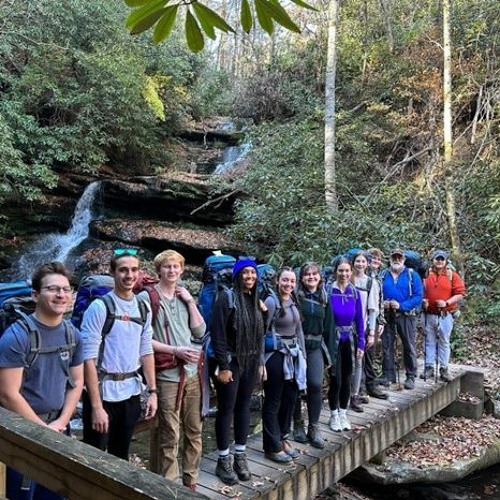
By: Katie Koblasz and Margaret Brogan This week's hosts, Katie Koblasz and Margaret Brogan, chat about camping pollution, and learn the sustainable camping way from special guest, Sophie Gibb, a recreation major at Georgia Southern University. Sophie recently embarked on a three-day backpacking trip with classmates in her adventure education course. She discusses the importance of sustainable camping, tips she learned in the months leading up to her trip and shares the seven leave no trace principles.
- The Dirt on Overconsumption: MND Episode 5
By: Karis Manning and Natasha Young This week's hosts, Karis and Natasha, talk about product consumption during the holidays, the influences of TikTok, how overconsumption leads to environmental issues, and they share some tips on how to be environmentally friendly during this holiday season. If you have any tips, let us know in the comments!
- Local Produce For Your Dinner Table
By: Margaret Brogan With Thanksgiving a week away, consider shopping locally for your dinner! Here are some places to check in locally here in Statesboro.
- Tips for an Environmental Thanksgiving
By: Natasha Young and Karis Manning With the holidays right around the corner, sustainability may be something to consider. There is more food waste during the holidays than any other time of year. To help you out in your efforts towards a more environmentally friendly Thanksgiving, check out this list of ideas to cut down on waste and carbon emissions. First, consider shopping locally for your produce and meat. This is not just a great way to be more sustainable in your food consumption, but also a great way to support your local economy. Second, try to include more plant-based meals, such as kale and mushroom stuffing or lentil and sweet potato shepherd’s pie. Here is a list of 23 different vegetarian meals to consider, including appetizers, main dishes, and desserts. Third, consider starting a compost for food scraps like potato skins and the ends of green beans. You can also add your uneaten leftover vegetables into your compost if you aren't able to finish them in time. Fourth, and this is a big one, try your hand at bringing your own reusable containers for leftovers and for cooking. As tempting as it is to use throw-away containers, they add up in the landfill. You can also save money in the long run by buying reusable containers, that way you don't have to continue purchasing one-use containers. Fifth, you can also consider trying to use up all of the ingredients that you already have or plan to use. Planning your meals ahead of time can help cut back on food waste through leftover ingredients. Finally, consider using the dishes and silverware that you or your family already own. Nobody likes having to do all of the dishes after Thanksgiving dinner, but it can save money and help lessen your waste during the holiday season.
- The Downfalls of the FDA… and Chocolate! MND Episode 4
By: Javon Huynh and Hayes Oliver This episode Javon and Hayes will cover food and its many pitfalls! Have you ever considered how food makes its way into stores and eventually our stomachs? Or how food safety in the United States is a little tricky these days, and for dessert? Our hosts also dive into the controversy of everyone's favorite go-to snack, chocolate! Let’s talk some dirt!
- War, What's It Good For? MND Episode 3
By: Javon Huynh and Hayes Oliver A podcast on how war impacts the environment: Reporters Javon and Hayes explain how war impacts the environment through topics such as the destruction of infrastructure, wildlife habitats and agricultural land.