Search Results
Search this site
21 results found with an empty search
- The Environmental Impact of the Holidays
By: Karis Manning As the warm summer air slips away and with Halloween taking a chilly departure, the holiday-filled winter season is coming full force. With many people gear up for Thanksgiving, Christmas, Kwanzaa, Hanukkah and various other winter traditions, the environment is prepping for an overwhelming number of problems. The waste created between the weeks of Thanksgiving and New Years are higher than any other point within the year. In a report from Stanford University, the waste that accumulates over these weeks in the form of shopping bags, wrapping paper, food, bows and ribbons, contributes to over 1 million tons of trash entering landfills each week. StudyFinds found that some people can average 43% more waste during the holiday season which adds up to around an extra 29 pounds per week with wrapping paper taking up 58% of the waste. During the holiday season, according to Clean Air Partnership, a nonprofit environmental organization, over 8,000 tons of wrapping paper is used, which equates to roughly 50,000 trees. While the paper ends up being dog-piled into landfills, things like glitter end up everywhere. Glitter can pollute into oceans which affects sea-creatures, and over time collect in their stomachs and cause them to die. While having a present wrapped in shiny glitter-encrusted paper is beautiful upon first glance, glitter is typically made from aluminum and plastic which is considered a microplastic. Microplastics are small fragments of any type of plastic less than five millimeters long. Due to their widespread presence in the oceans, they pose a potential physical and toxicological risk to underwater organisms. Even items that can usually be recycled, like some wrapping paper, are no longer recyclable if it's coated with glitter in any way. Over 2 billion holiday cards are sold each year in the United States. Non-biodegradable cards that end up in landfills tend to stay there for several years. When all of this plastic breaks down, similarly, to wrapping paper, the microplastics are left behind within the soil, and the plastics are never fully removed. The volume of emissions created by vehicles that deliver these cards contribute to the carbon footprint. According to Brightly. Eco, sending one card produces 140 grams of carbon dioxide. To add on to the carbon dioxide emissions of delivery vehicles, is the amount of travel and transportation done by those seeing their families. In 2022, Greenly, a Paris based carbon accounting firm, reported that at least 70% of carbon emissions is made traveling to and from a holiday trip. Most forms of transport burn fossil fuels that emit carbon dioxide which contributes to climate change. The airline industry is responsible for a 5% of global warming during the holidays and driving one mile emits over 400 grams of CO2, which produces a large carbon footprint. Holiday lights also contribute to the production of carbon dioxide emissions. Strings of lights produce enough carbon dioxide to fill up to 15,000 hot air balloons. The increase in light pollution seen from space increases from 20% to 50%, according to NASA during the holidays. Excessive outdoor lighting has adverse effects on the planet such as washing out stars in the sky, disrupting ecosystems of nocturnal wildlife, and wasting energy. For wildlife, coral grows under the moonlight, and with artificial lighting corrupting the skies, baby turtles cannot see their way to the ocean. The reproduction of frogs and the migration of birds also see an impact during the holidays. Not only can it affect the environment and wildlife, but also humans. With these lights, it makes it difficult to sleep, changing the amount of melatonin that we produce which can cause headaches and increased anxiety. To mitigate these impacts on the environment, communities can take steps such as using energy-efficient lighting, mimizing travel, and reducing waste through mindful consumption. Decorating with LED lights, gifting with zero-waste wrapping paper, reusing and repurposing shipping boxes, and wrapping paper are a few ways to protect our environment during the holiday season. OnePoll, a polling website, found that 6 in 10 Americans produce more waste during the holiday season and 54% said that they are less excited for celebrations when thinking about their waste production. Along with that, 56% said that they feel as though they need to choose between being environmentally conscious and fully enjoying their holidays. The holidays are the most wonderful time of the year, but it does not have to be harmful to the environment. There are many articles like Four Ways to Recycle—or Reuse—All That Holiday Wrapping Paper and 7 Ways to Reduce Food Waste During the Holidays.
- Don't throw away that pumpkin!
By: Natasha Young Happy Halloween from Mother Nature's Dirt! With Halloween festivities passing by, you might be ready to throw your pumpkin in the trash but hold that thought! Here are seven things to do with your pumpkins after Halloween. The first thing you can do is make a pumpkin bird feeder. You can take the top off and add birdseed into the middle with some twine to tie it on a branch. You can feed fresh pumpkins to chickens if you have them, but be careful to plan this within a day or two after carving your pumpkin. It’s also worth noting that you should remove the pumpkin remains before bedtime so the pumpkin doesn’t attract anything unsavory for your chickens Another thing you can do is donate your pumpkin to a farm for pigs to eat. Georgia has several farms that take carved and uncarved pumpkins like Little Paws Farm and Misfit Acres. You can find a full list at Pumpkinsforpigs.org. Composting your pumpkin is another efficient way to use up all of your pumpkin after Halloween. Since pumpkin is a thick vegetable, you will need to break it up or chop it up before you're able to properly compost your pumpkins. If you have a backyard, you can also bury your pumpkin just make sure to remove the seeds or you might have a pumpkin patch yourself come next fall! Unless, of course, you would like a pumpkin patch. For uncarved pumpkins, you can do anything that you can do with carved pumpkins and more. If you’re ready for Christmas right after Halloween, you can make your uncarved pumpkins into a snowman. Gather two or three pumpkins in varying sizes and attach them with hot glue. Then, you can paint and create your own fun pumpkin snowman. Just remember, use paint that can be removed or else you can’t donate or compost your pumpkins later. Baking or cooking with your edible pumpkins is a great way to enjoy your pumpkin throughout the Hallowthanksmas season. Here is a recipe for pumpkin puree which is usually the base for pumpkin recipes. All of these ideas are great options for reducing landfill waste from pumpkins, but please do not just throw your pumpkins out into the woods since they will rot and could make animals sick. If you have any other suggestions, drop them in the comments for others to enjoy.
- Winter is coming... for the bees
By: Margaret Brogan Stephanie Scott addresses the Brier Creek Bee Club which is held monthly at the Scott Family Farm in Burke County. Brier Creek Bee Club is free to attend for anyone interested on every fourth Saturday of the month. Scott speaks to club members about preparing their hives for winter. The club discusses several preselected topics each month like modern beekeeping methods. A club member lights a bee smoker which is used to calm the bees when keepers have to open the bee boxes and ensures their safety from bee stings. Most of the attendees of the bee club are local beekeepers who come to exchange tips and discuss current events affecting their hives. Scott demonstrates to members how to properly secure their suits. Beekeepers wear protective suits including mesh masks to protect their body from bee stings. Pictured is part of the process of making a candy board. This month, club members learned how to make candy boards, which are used in the winter to help feed the bees. Beekeepers can use different frames to create candy boards. If using a frame with holes, beekeepers should first lay down a layer of window mesh so that the sugar mixture will stick. Scott explains the importance of wearing a respirator mask when administering oxalic acid to hives. Oxalic acid is utilized to rid hives of Varroa mites, a parasite that feeds on honeybees, and can be administered in several different forms. Scott demonstrates how to use an oxalic acid vaporizer. Oxalic acid, when delivered in vaporized form, can be harmful to humans but does not harm honeybees. A bee club member uses a hive tool to open a bee box, hive tools look like small crow bar style tools to pry the top of the box off. When opening the bee box, the beekeeper must first smoke the hive through the hole in the box, and continue smoking them while slowly prying the lid off. Scott demonstrates another method of feeding hives in the winter with granulated sugar. Sugar can be administered to the hive in a variety of forms such as candy boards, sugar syrup or capped honey. Scott places a bag of sugar in the hive to feed the bees while they’re docile. Beekeepers can take a simple bag of sugar and place it in the bee box rather than making a candy board when necessary. A bee club member removes the inner cover. The inner cover is turned over during the winter to help keep the honeybees warm and turned back in the summer. Bee club members examine the hive. Scott opened several of her hives to explain the different measures taken in preparing a weak hive for winter versus a strong hive. A beekeeper reaches for his smoker. The bee club discussed Varroa mite treatments, winter feeding and new yellow-legged hornet traps at this month's meeting. Another beekeeper smokes the hive. A fourth yellow-legged hornet's nest was discovered near Savannah this past week, and Scott has taken to preparing club members for the possible threat to their hives. Two club members work to remove a bee box lid. Scott distributed the new traps to members and instructed them to use tilapia as bait until the winter months, then switch to syrup. All photos are credited to Margaret Brogan
- The Dirt on Cemeteries: MND Episode 2
By: Morgan Boone and Jamari Davis Our hosts, Morgan Boone and Jamari Davis, talk us through cemeteries and their impact on our limited space on Earth.
- Invasive hornets pose threat to GA agriculture
By Margaret Brogan and Javon Huynh Yellow-legged hornets, an invasive species that poses a threat to local agriculture, were spotted in Savannah, Georgia this August. The yellow-legged hornets, native to South-East Asia, feed on a variety of insects including honey bees. The yellow legged hornet is a “close cousin of the northern giant hornet” which is also best known as the “murder hornet” according to an NPR article. Allie Crockett, a local representative for the Brier Creek Soil and Water Conservation District, says that this invasive species could have a detrimental impact on local agriculture. Agriculture is the number one industry in Georgia according to CAES Newswire. “The big issue is the problem it will cause by killing the honey bees,” said Crockett. “No bees, no food for us.” Honey bees play a vital role in the crop pollination process which, according to the FDA, adds $15 billion in crop value. Crop pollination through honey bees is necessary for certain fruits and vegetables like cucumbers and eggplants which are two of Georgia’s top export crops according to East Fruit. Bees of Georgia, a website run by Georgia Gwinnett College, said that bees pollinate 1 in every 3 bites of food that U.S. citizens eat daily. The hornets were discovered near Savannah in August. This was the first time a living yellow-legged hornet has been found in the United States, according to the Georgia Department of Agriculture. “Two nests have been found outside of Savannah,” Crockett said. “The Department of Agriculture is desperately trying to get the word out and have people report sightings in order to find out how far it has made it in Georgia.” Josh Sanders, the owner of Sanders Honey Company in Waycross, Georgia, was not aware of the threat the hornets pose to local hives until recently. Sanders hasn’t been able to develop a protocol to protect his hives yet. “I have read and heard through the Georgia Department of Agriculture not to kill the yellow-legged hornets if found,” Sanders said. “Instead, call the department and they will come and put trackers on the hornets and track them back to their nest and hopefully eradicate them or control them.” The Georgia Department of Agriculture and professionals from the University of Georgia have been able to locate and destroy two nests with the help of beekeepers. Honey bee populations have continued to decline due to parasites like varroa mites, pesticides, habitat loss and diseases which can affect upwards of 40% of colonies in the United States according to the USDA. Isis Swartz, an environmental science student at Georgia Military College, is concerned about the potential harm the species may cause. “I believe yellow-legged hornets are detrimental to our environment as they pose a threat to other pollinators in the United States,” said Swartz. “They are another environmental bad in all the bads that we have created.” Tim Davis, director of the Coastal Georgia Botanical Garden, spoke with WJCL in September about the urgency of reporting any potential sightings. “If you see something and you're not sure, go ahead and get a photo of it, send it into GDA or the extension office, let us look at it,” said Davis. “I’d rather get a lot of things that aren’t this, than miss something that is.” Davis was contacted for more information about the potential impacts of an outbreak but did not comment in time for the publication of this article. If you believe you may have spotted a yellow-legged hornet, take a photo and fill out this online reporting form provided by the Georgia Department of Agriculture.
- Got shrimp? MND Podcast Episode 1
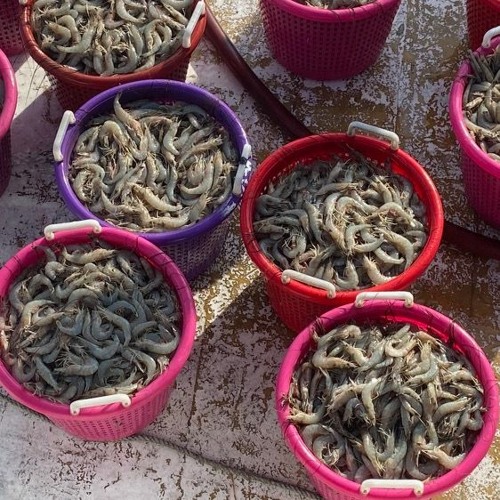
By: Jamari Davis and Morgan Boone Mother Nature's Dirt's Jamari Davis and Morgan Boone discuss the environmental impact and ramifications of shrimp dumping off the Southeast coast.
- Oyster restoration project creates new essential habitat in Georgia
By: Karis Manning Volunteer students from Georgia Southern University assisting Georgia Department of Natural Resources Coastal Resources Division workers bag oyster shells. Photo Source: Tyler Jones The Georgia Department of Natural Resources collaborated with Georgia Southern and Yamaha Rightwaters in its latest oyster reef restoration project. Associate professor of biology at Georgia Southern, John Carroll, works with the Georgia Department of Natural Resources (DNR) and helped come up with the project to do restoration along the coast and to answer questions surrounding carbon capture. “I try to answer applied questions, and they do reef restoration,” said Carrol. “I try to do research that helps give them information that might be beneficial for them planning their projects in the future.” The DNR has expanded their oyster restoration projects across the vast Georgia coast as a way to reinstate oyster populations that have depleted significantly due to habitat loss. With the research from these projects, Yamaha Rightwaters and Georgia Southern will provide the DNR with data that can determine the carbon burial of newly formed oyster reefs within Georgia. Oysters play an important role in the ecosystem in the southeast, as they form reef structures that can consist of up to thousands of individual oysters at a time. In their 3 dimensional structure which resembles a solid foam, they create habitats for smaller organisms such as shrimp, fish, crabs and many more. One of the main contributions' oysters bring to the ecosystem is that they filter water. As suspension feeders, they remove particles from the water, and help improve water quality within the structure they form to help protect the shorelines. Austin Lowery, recent Georgia Southern graduate with a biological sciences degree, has done research on what impact oysters have on the environment and what they do to help other organisms surrounding them. “These adaptations collectively enable oysters to survive and thrive in a wide range of marine environments, from coastal estuaries to deeper offshore waters,” said Lowery. “Their ability to adapt to various conditions is a testament to their resilience as a species.” Oysters are bivalve mollusks which means they have 2 shells that they live in that protect them from predators as they get larger. Oysters often exhibit shell coloration and patterns that help them blend in with their surroundings, providing a form of camouflage from potential predators. When exposed to low tide, the shells can close and help maintain their inner-body forms. Due to being suspension feeders, oysters can extract plankton and organic particles from the water column. They have specialized gills equipped with cilia that move water over their gill filaments. As water passes through, oysters extract nutrients and food particles, effectively filtering the surrounding environment. While the DNR is working on reef restoration projects, they encourage the public to volunteer with the project, and advocate for responsible coastal development practices that consider the impact on natural habitats. “A really good thing we can do when eating oysters is by recycling the shell”, said Carroll. “Don’t throw them in the trash, don't use them to make art projects, bring all those shells back to these shell recycling areas, we can put these shells back in the water, and that's the habitat new oysters need to grow.” Protecting oyster reefs is crucial for maintaining healthy coastal ecosystems. Educating boaters, kayakers, and snorkelers about the importance of avoiding oyster beds to prevent habitat destruction, choosing sustainably sourced seafood from reputable suppliers, and participating in beach cleanups are many other ways the public can make a difference in protecting the oyster reefs. “Oyster restoration is a critical component of protecting and restoring Georgia’s coastal ecosystems,” Paul Medders, the Coastal Resources Division of Habitat Enhancement and Restoration Unit lead, said to Grice Connect. “This project will help to reestablish oyster reefs in the North Newport River, which will benefit both wildlife and people.” Since 2019, the Georgia Department of Natural Resources Coastal Resources Division (CRD) has completed six oyster restoration projects, and with the data from the recent restoration project, they hope to gain more information about carbon sequestration of oyster reefs.
- Scientists discover new dolphin
By: Hayes Oliver Scientists discovered a new dolphin species making waves along the Southeast coast after years of studies prove they are different from common bottlenose dolphins. Scientifically named Tursiops Erebennus or commonly known as Tamanend’s bottlenose dolphin differs from other bottlenose dolphins in several ways. Typically found inshore, this species of dolphin eats different fish and has a smaller body compared to others. Their evolved, shortened spines have helped them develop ways to navigate tighter spaces where their offshore relatives cannot, bringing them closer to rivers and estuaries. By taking skull, spine and tissue samples from over 100 stranded bottlenose dolphins, scientists were able to conclude nearly a decade’s worth of research. The research was led by the National Oceanic Atmospheric Administration along with several East Coast schools like the University of Miami and College of Charleston. Tara Cox, assistant professor of the Marine Science Program at Savannah State, the only member of the Savannah based school to collaborate on the study, has been helping track and study Tamanend Erebennus for nearly 6 years. Her specialty in spatial ecology of bottlenose dolphins led her to take a deeper dive into how this species interacts with its environment. “These dolphins are one of the most highly studied mammals along our coast and yet we still have so much more to discover,” Cox said. “Marine life like this is very exciting but they are the worst beggars.” Even though they were able to conclude their studies, human behavior and climate change threaten to erase years' worth of research and the Tamanend’s population. Defying local conservation warnings, as well as the Marine Mammal Protection Act, a federal law that prohibits feeding wild marine mammals, boaters are feeding them foods not natural to their diet. If given these types of foods, dolphins can become accustomed to being fed which results in a dependence on humans to provide. Harming natural instincts to hunt for not only themselves but the offspring produced causing malnutrition within local populations. “Dolphins are wild animals, so when people are feeding them hot dogs, Doritos, or bait from bait shops, it can introduce health issues,” Cox said. “Calves are beginning to develop levels of starvation from mom’s not feeding them as a result of the abnormal feeding.” As the East Coast invites these new members of marine life during a declining climate, non-profits like the Lowcountry Marine Mammal Network in South Carolina are pushing for more protection of marine mammals in the state's waters. “It’s a big deal, we have a huge responsibility to understand this and protect these dolphins,” Executive Director and founder of Lowcountry Marine Mammal Network, Lauren Rust said to Statehouse Report, “Having a local population is already important, we always say how critical they are. But when you make them their own species, it just strengthens the case.” Between South Carolina and Georgia, a population of nearly 300 bottlenose dolphins have been accounted for, according to Lowcountry Marine Mammal Network. This is a number too low to be considered endangered under the federal Marine Mammal Protection Act and instead, Tamanend’s bottlenose dolphin is listed as strategic stock, meaning any deaths could leave a large impact on surrounding ecosystems.
- Campus Cleanup
By: Morgan Boone, Multimedia Reporter